
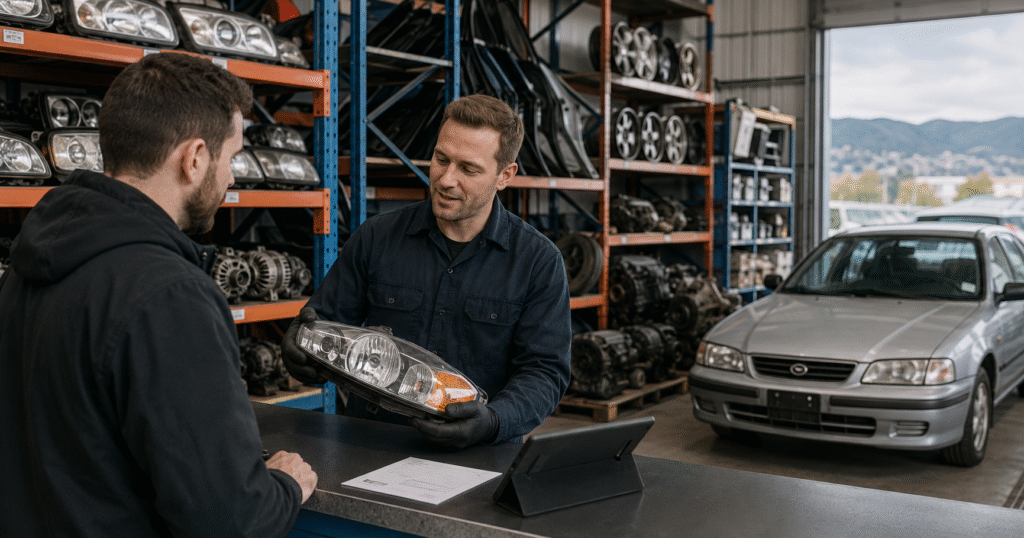
The most reliable place to buy used auto parts in Dunedin is a professional salvage yard that tests, inspects, and catalogues parts before they hit the shelf not a private seller. Do that, confirm the part fits your exact vehicle using your VIN, and check what warranty you get, and you can save 50 to 70 percent compared to buying new without gambling on quality.
This guide covers where to buy, how to confirm a part fits, what to check before you pay, and the mistakes that turn a cheap part into an expensive lesson.
Why buy used car parts instead of new in Dunedin?
Because most cars on Otago roads are old enough that new factory parts cost more than the repair is worth and quality used parts are the same genuine components for a fraction of the price.
New Zealand runs one of the oldest vehicle fleets in the developed world, a pattern confirmed year after year in the Ministry of Transport’s fleet statistics, and Dunedin is no exception. Most vehicles here are Japanese imports Toyota, Nissan, Mazda, Subaru often ten years old or more. For a car that age, new OEM parts can cost more than the job is worth, and some are simply no longer made.
Parts salvaged from dismantled vehicles are genuine factory components with plenty of life left, at a fraction of the price of new. You also keep good parts out of the landfill, which is a nice bonus.
Where can you buy used auto parts in Dunedin?
You have three realistic options: a local salvage yard (most reliable), online marketplaces (cheapest but riskiest), or new aftermarket parts. Here is how each one stacks up.
Local car wreckers and salvage yards
A professional salvage yard is the best starting point for most buyers. When a vehicle arrives, it goes through a proper dismantling process fluids are drained, the car is inspected, and reusable components are removed, tested, and catalogued before they go on the shelf. That testing step is exactly what separates a wrecker you can rely on from a random pull off a rusting shell.
At Dunedin Autoparts we stock tested second-hand parts for Japanese and European makes, and the team can confirm availability and fitment over the phone before you make the trip.
Online marketplaces
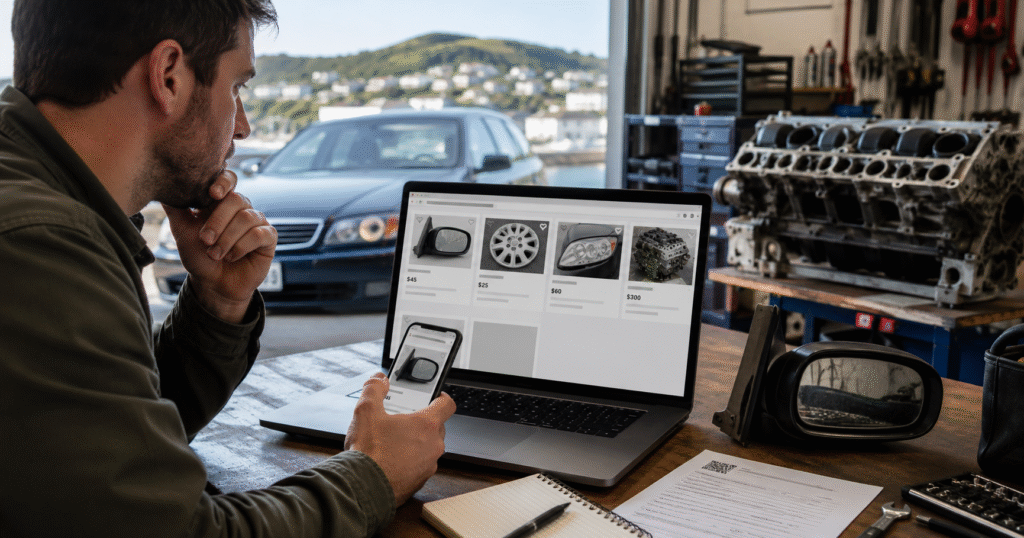
Trade Me and Facebook Marketplace both list plenty of cheap parts across Otago, and genuine bargains do exist. The catch is that private sellers rarely test anything, returns are usually impossible, and you carry all the compatibility risk yourself. That is fine for a mirror or a hubcap and risky for an engine.
New aftermarket parts
Aftermarket parts are new components made by third-party manufacturers rather than your car’s original maker. Quality ranges from excellent to poor depending on the brand. For an older vehicle, a tested used OEM part often beats a budget aftermarket one, because it was built to the exact factory specification your car was designed around.
OEM vs used OEM vs aftermarket: which should you choose?
For most repairs on an older car, used OEM offers the best balance of price, fit, and reliability. Here is the difference at a glance:
| Part type | What it is | Fitment | Price | Best for |
| OEM (new) | Original equipment straight from the manufacturer | Guaranteed | Highest | Newer cars under warranty; safety-critical parts |
| Used OEM | The same factory part, salvaged from another vehicle | Factory fit | Low 50–70% less than new | Most repairs on older or discontinued models |
| Aftermarket | A third-party copy; quality varies by brand | Varies by brand | Low to medium | When used OEM isn’t available |
In short: OEM guarantees fit but costs the most, used OEM gives you that same factory fit at second-hand prices, and aftermarket is a gamble that depends entirely on the brand.
How do you check part compatibility before buying?
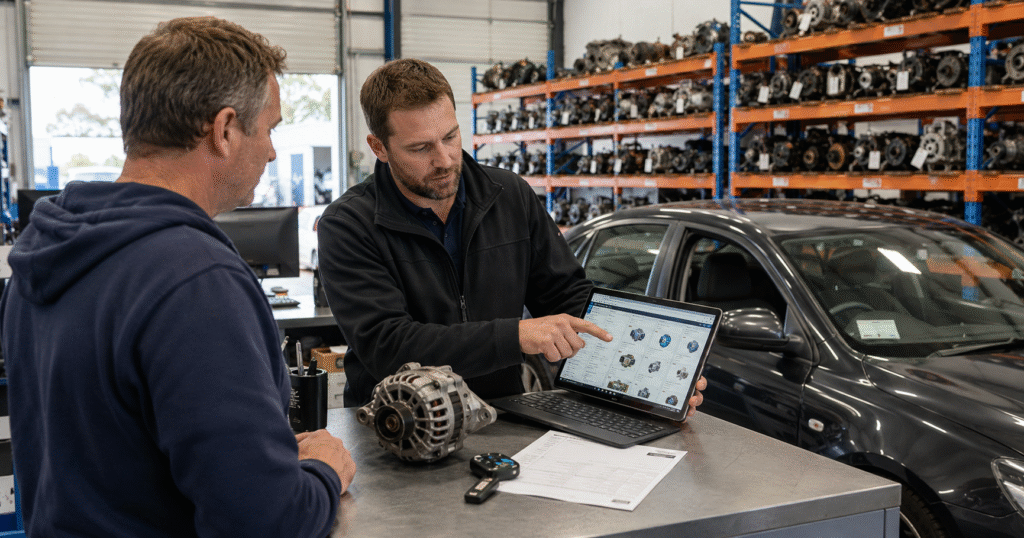
Match your vehicle’s make, model, year, engine, and ideally your VIN to the part. Fitment, not quality, is the single biggest cause of used-part headaches, because two cars with the same badge can use different parts across years, trims, and engine variants.
Before you order anything, have these details ready:
- Make, model, and year of your vehicle
- Engine type and size, since one model often ran several engines
- Your VIN or chassis number, which lets the seller confirm the exact factory specification
- The part number of the old component, if you can find it
A reputable seller will ask for your VIN before quoting on anything mechanical. If a seller does not care what car the part is going into, that tells you everything you need to know.
How do you buy a used engine or transmission safely?
Only buy a major unit from a seller who can tell you the donor vehicle’s odometer reading, show evidence it was tested, and back it with a written 30 to 90 day warranty. Because the money involved is serious, engine and transmission purchases deserve extra care.
Ask three questions before you pay:
- What is the odometer reading of the donor vehicle? Lower kilometres generally mean more life left.
- Was the unit tested before or after removal, and is there compression or running evidence?
- What warranty applies, and is it in writing? Most professional NZ wreckers back major components for 30 to 90 days, which gives you time to install and test the unit properly.
Never buy a major component in Dunedin or anywhere that is sold strictly as-is, with no comeback.
What are your rights, and how do you verify a seller?
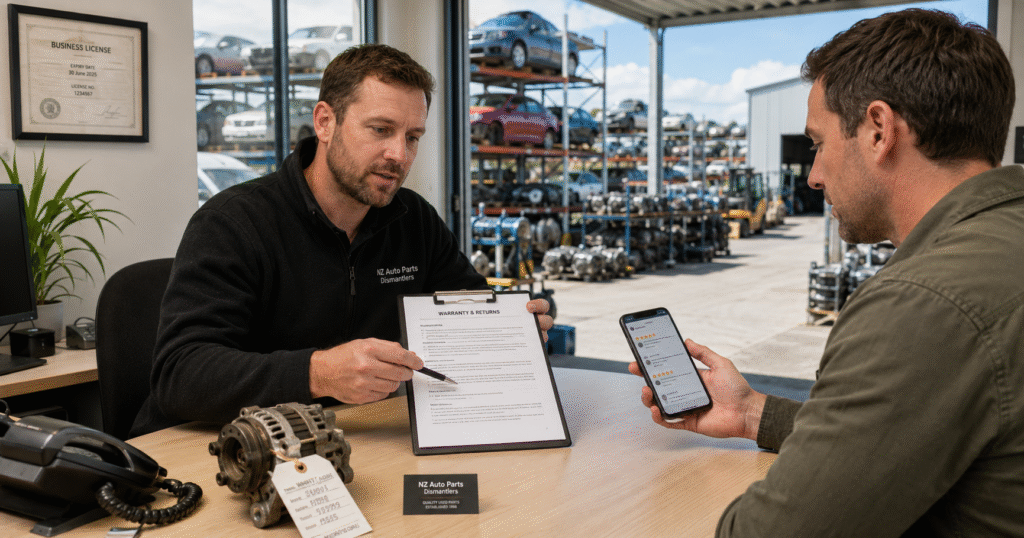
Buying from a registered New Zealand business gives you Consumer Guarantees Act protection even on second-hand parts: the part must be of acceptable quality and fit for purpose. Private sales give you none of that, which is one more reason established sellers are worth it. You can read the detail on the government’s Consumer Protection site.
Verifying a reputable seller takes about five minutes:
- Check they have a physical yard and a landline.
- Read their Google reviews.
- Confirm they offer a written warranty or return policy.
- Ask whether parts are tested before sale.
A trustworthy dismantler answers all of that without hesitation.
Quick inspection checklist for pickup
Even with a tested part, look it over before you leave:
- Check for cracks, heavy rust, worn bushes or seals, and impact damage.
- Compare it side by side with your old part if you brought it.
- For electrical items, ask if you can see them bench-tested.
Thirty seconds of looking beats a return trip.
Frequently asked questions
Where can I buy used auto parts in Dunedin?
Local wreckers and salvage yards are the most reliable source. Dunedin Autoparts stocks tested used parts for Japanese and European vehicles and can check availability over the phone, so you avoid a wasted trip.
Are used car parts reliable?
Yes, when they come from a reputable dismantler that inspects and tests components before sale. Most problems people have with second-hand parts trace back to untested private sales, not the parts themselves.
How much can I save by buying used instead of new?
Typically 50 to 70 percent compared to new OEM prices. Savings are biggest on body panels, engines, transmissions, and parts for older or discontinued models.
What information do I need to give the seller?
Make, model, year, engine type, and ideally your VIN or chassis number. The VIN lets the seller match the exact factory specification, which prevents almost all fitment problems.
Do used parts come with a warranty?
Most professional NZ wreckers offer 30 to 90 days on major components. Always ask what is covered in writing before paying. Buying from a registered business also gives you Consumer Guarantees Act protection.
Which parts are safe to buy used?
Engines, transmissions, alternators, starters, body panels, doors, mirrors, lights, wheels, and interior trim are all good used buys. For safety-critical wear items like brake pads and seatbelts, buy new.
Can I get parts for European cars in Dunedin?
Yes. Wreckers regularly dismantle European makes alongside Japanese imports, and used parts are often the most affordable option, since new European parts carry premium pricing in New Zealand.
What if the part does not fit my car?
If you supplied the correct vehicle details and bought from a seller with a return policy, you can exchange or refund it. This is exactly why buying from an established yard beats a no-returns private sale.
Get your car back on the road for less
Buying used auto parts is one of the smartest ways to keep an older car on the road without pouring money into it. Stick to sellers who test their stock, confirm fitment with your VIN, insist on a warranty for major components, and give every part a quick inspection before you drive away.
Dunedin Autoparts makes the whole process simple. Tell us your vehicle details and the part you need, and our team will check stock, confirm compatibility, and quote you a fair price on the spot. Tested parts, honest advice, and real backup after the sale.
Send us a parts request or call us and get your car back on the road for less.