
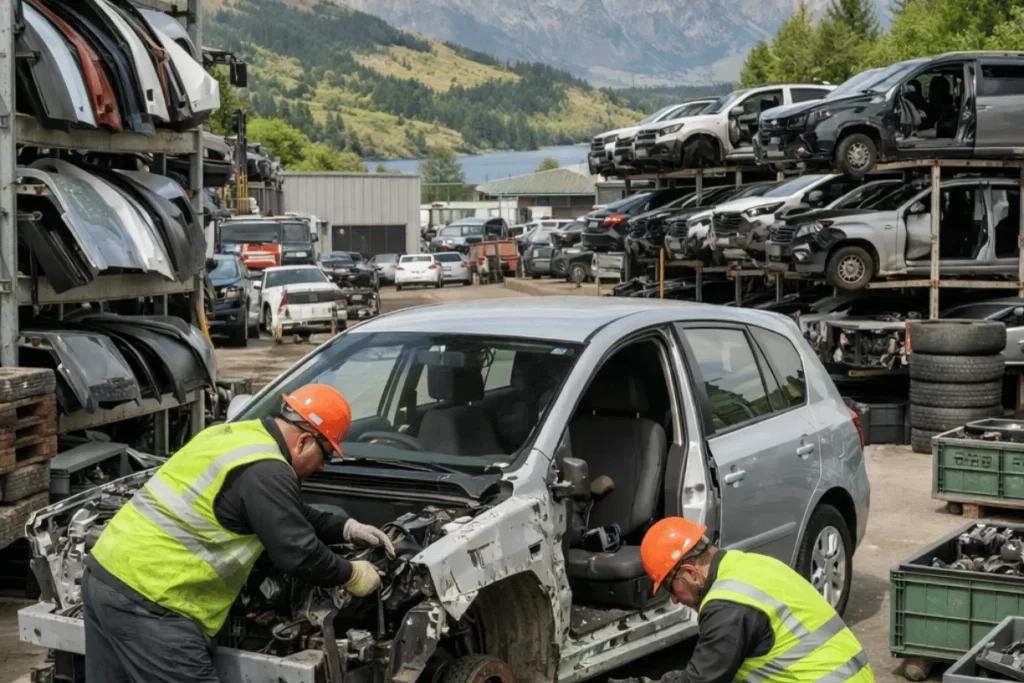
Auto recycling in Queenstown plays a defined role in how end of life vehicles are removed, processed, and redirected away from landfills. The system exists to protect the environment, recover usable materials, and ensure vehicles are disposed of under local and national standards. For residents, it offers a clear path to legally and responsibly remove unwanted cars while supporting reuse and recycling.
If replacement parts are needed during this process, quality used components are available through trusted suppliers.
Visit Dunedin Auto Parts
Where Auto Recycling Fits in Queenstown’s Disposal Network
Queenstown’s vehicle disposal system connects private recyclers, regional transfer stations, and licensed dismantlers. When a car reaches the end of its usable life, auto recycling becomes the controlled step that prevents unsafe dumping and material waste.
Auto recycling in Queenstown ensures vehicles are collected, deregistered where required, and moved into facilities equipped to dismantle them safely. This process aligns with wider Otago waste reduction goals and reduces pressure on landfill sites.
How the Auto Recycling Process Works
The auto recycling process follows a structured sequence designed to handle safety risks and recover value.
Vehicle intake and assessment
Each vehicle is inspected to determine whether parts can be reused or sold. Usable engines, transmissions, and panels are separated early to avoid damage.
Fluid removal and hazard control
Fuel, oils, brake fluid, and coolants are drained and stored for approved disposal or treatment. This step prevents soil and water contamination.
Dismantling and material separation
Metal components are sorted by type. Steel and aluminum are sent for smelting, while plastics, rubber, and glass are processed through specialist recyclers.
Environmental Impact of Auto Recycling in Queenstown
Auto recycling in Queenstown directly lowers environmental risk by stopping abandoned vehicles from leaking harmful substances. Recycling metals also reduces the need for raw material mining, which lowers energy use and emissions.
Reusing parts also extends the lifecycle of existing components. This supports local repair shops and keeps functional materials in circulation rather than disposal streams. The benefits align with sustainable transport and waste policies promoted across the region.
Economic Value for Local Communities
Auto recycling supports more than waste control. It creates supply chains for affordable used parts, transport services, and metal processing. Local workshops benefit from access to tested components at lower costs.
Common Challenges in the Queenstown Region
Vehicle disposal in Queenstown faces unique challenges due to tourism traffic, seasonal vehicle turnover, and distance from large processing hubs. Transport logistics can increase costs if recycling is delayed.
Auto recycling providers address this by coordinating collection schedules and maintaining regional coverage. Clear public awareness also reduces illegal dumping and abandoned vehicles.
Why Licensed Auto Recyclers Matter
Using licensed recyclers ensures vehicles are handled according to New Zealand regulations. Unregulated disposal increases environmental damage and legal risk for owners.
If quality recycled parts are needed for repairs or resale,
Get Parts from Dunedin Auto Parts
Conclusion
Auto recycling in Queenstown is a structured system that balances environmental responsibility with economic practicality. It removes unsafe vehicles, recovers valuable materials, and supports local repair and recycling industries. When handled through licensed providers, the process protects land, water, and community standards while keeping reusable parts in circulation.
For dependable recycled auto parts backed by responsible sourcing, Dunedin Auto Parts offers a trusted option across Otago and beyond.
Frequently Asked Questions
What happens to old cars in New Zealand?
Old cars are collected by licensed recyclers, deregistered if required, dismantled, and processed to recover metals, parts, and fluids under environmental regulations.
How is an end of life vehicle processed in Queenstown?
The vehicle is inspected, fluids are removed, reusable parts are salvaged, and remaining materials are recycled through approved channels.
Can a car be recycled in Queenstown if it does not run?
Yes. Non running vehicles are accepted and transported for dismantling and recycling.
Where can a dead car be legally disposed of near Queenstown?
Licensed auto recyclers and approved wreckers provide legal disposal services across the Queenstown and Otago region.
What materials are recovered from auto recycling?
Steel, aluminum, copper, plastics, rubber, glass, and reusable mechanical parts are commonly recovered and reused or recycled.
Ready to choose a smarter path for vehicle disposal and parts sourcing?
Explore Dunedin Auto Parts Today