 Skip to content

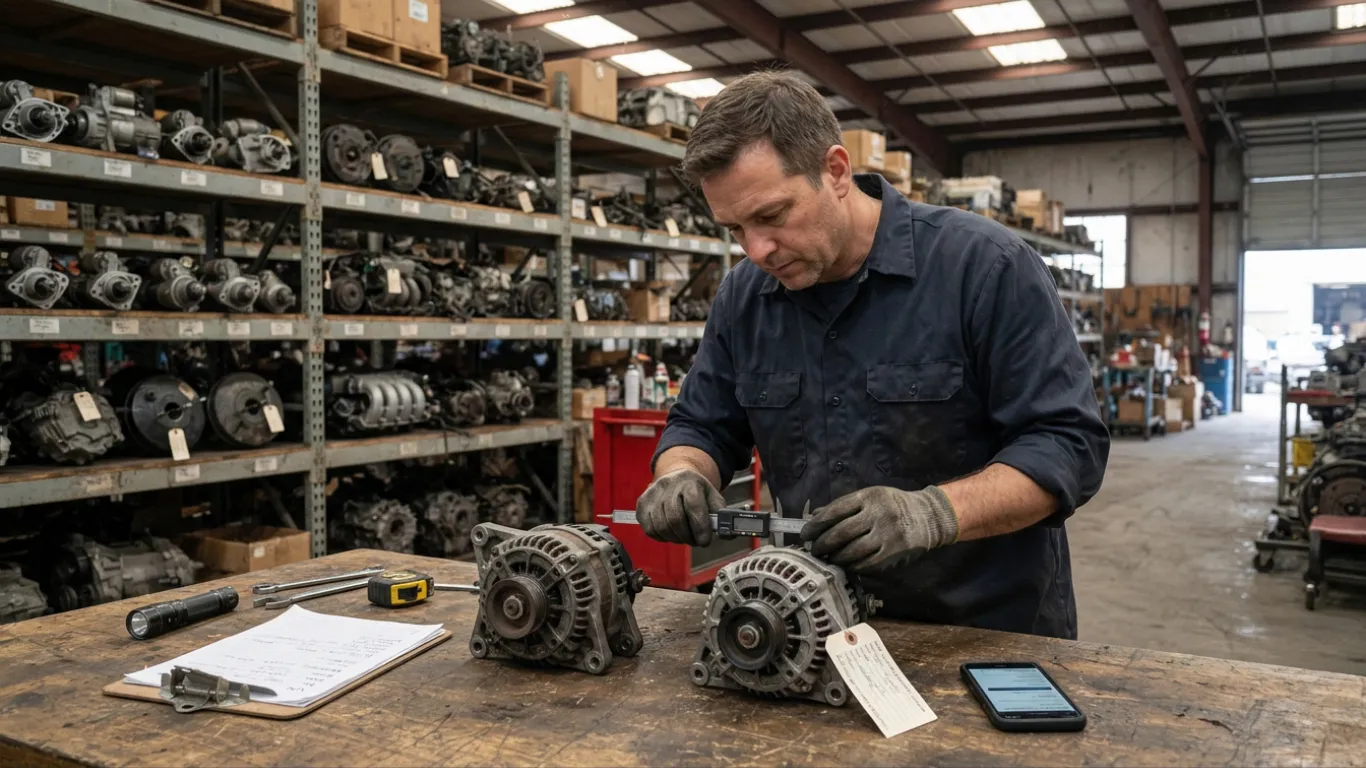
To check used auto part compatibility, compare your vehicle’s make, model, year, engine code and transmission type with the replacement part. Also, check your VIN or chassis number and match the OEM part number.
Parts that look similar may have different dimensions, mounting points or electrical connectors. Buying the wrong part can cause fitting problems and extra repair costs.
This guide explains how to check part numbers, vehicle specifications and physical features, inspect used parts, and confirm compatibility with a supplier before buying.
Why Checking Used Auto Part Compatibility Matters
Checking used auto part compatibility helps you avoid buying a part that does not fit or work with your vehicle. The wrong part can cause installation problems, electrical faults and extra repair costs.
Before buying, compare your vehicle details, VIN or chassis number, and OEM part number with the replacement part. Also check its dimensions, connectors and condition. If you are unsure, ask a used auto parts supplier to confirm the fitment before purchasing.
1. Gather Vehicle Information Before Buying Used Auto Parts
Before buying used auto parts, collect your vehicle’s make, model, year, engine code and gearbox code. These details help identify the correct parts because vehicles of the same model may have different specifications.
Vehicle Make, Model and Manufacturing Year
Note your vehicle’s make, model, year and generation. Different versions may use different parts.
Engine Size and Engine Code
Check the engine capacity and code to find parts designed for your engine.
Transmission Type and Gearbox Code
Identify whether your vehicle has a manual or automatic gearbox. Check its code before buying a replacement.
Vehicle Trim and Specifications
Different trim levels may have different headlights, suspension and electrical components.
Where to Find Your Vehicle Information
Check your registration documents, identification plate, owner’s manual or service records.
2. Use Your VIN or Chassis Number to Check Part Compatibility
Your VIN or chassis number helps identify your vehicle’s specifications and find suitable replacement parts. Share it with your supplier to check compatibility before buying.
What Is a VIN Number?
A VIN is a unique 17-character vehicle identifier. Use the NHTSA VIN Decoder to check available vehicle details. Japanese imports may use a chassis number instead.
Where to Find Your Vehicle Identification Number
Check the dashboard, driver’s door area, identification plate or vehicle documents.
How VIN Helps Identify the Correct Replacement Part
Parts catalogues like PartSouq support VIN or chassis number searches for applicable vehicles. Confirm the OEM part number before buying.
Why You Should Not Rely on Your Registration Number Alone
A registration number may not show exact engine or part specifications. Share your VIN or chassis number for a more accurate check.
3. Match the OEM Part Number Before Buying
Check the OEM part number on your original component and compare it with the used replacement. Matching the correct number helps you avoid buying a part with different specifications.
What Is an OEM Part Number?
An OEM part number is a unique reference used to identify a specific vehicle component.
Where to Find the Original Part Number
Check the label or stamped number on your original part. You can also search PartSouq or ToyoDIY, a third-party Toyota parts catalogue.
How to Compare OEM Numbers Between Used Parts
Compare every letter and digit on both parts. Ask the supplier to confirm whether the numbers match or refer to approved replacement versions.
Can Two Different OEM Numbers Be Interchangeable?
Yes. Manufacturers sometimes replace older part numbers with newer ones. This is called part supersession. Always confirm compatibility before buying.
4. Check Vehicle Model and Engine Compatibility
To find the correct used auto part, check your vehicle’s model, engine code, transmission type and manufacturing year. Vehicles with the same model name may have different parts depending on their specifications.
Can the Same Car Model Have Different Parts?
Yes. Different model generations and variants may use different engines, gearboxes, headlights and electrical components.
How Engine Size Affects Part Compatibility
Engine capacity and engine code help identify compatible engines, mounts, sensors and related components.
Does Transmission Type Affect Compatibility?
Yes. Manual and automatic gearboxes may have different ratios, mounting points and connections. Check the gearbox code before buying.
Why Manufacturing Year and Vehicle Variants Matter
Manufacturers may change parts between production years and trim levels. Confirm your vehicle’s exact year and variant before purchasing.
5. Compare the Physical Specifications of the Used Auto Part
Before buying, compare the used part with your original component. Check its dimensions, mounting points, connectors and technical features to make sure it fits your vehicle.
Compare Part Dimensions and Shape
Check the length, width, height and shape. Different dimensions may prevent proper fitting.
Check Mounting Points and Bolt Positions
Compare brackets, bolt holes and mounting positions with your original part.
Inspect Electrical Connectors and Wiring
Check connector shapes, pin positions and wiring layouts. Similar connectors may have different configurations.
Compare Sensors and Other Technical Features
Check sensor locations, connections and other features. Some electronic parts may require coding or programming.
Why Similar-Looking Parts May Not Fit
Parts can look identical but have different specifications. Always check the part number and technical details before buying.
6. Check Compatibility for Different Types of Used Car Parts
Different used auto parts require different compatibility checks. Compare the relevant part numbers, codes, dimensions and connections before buying.
How to Check Used Engine Compatibility
Check the engine code, capacity, mounting points and wiring.
How to Check Used Gearbox Compatibility
Compare the gearbox code, transmission type and ratios.
How to Check Alternator Compatibility
Check the OEM number, amperage and electrical connector.
How to Check Headlight and Tail Light Compatibility
Match the side, mounting points, connectors and lighting functions.
How to Check ECU and ABS Module Compatibility
Compare part numbers and check coding or programming requirements.
7. Inspect the Condition of a Used Auto Part Before Buying
Before buying a used auto part, check for physical damage, wear and corrosion. A compatible part may still be unsuitable if it is in poor condition.
Check for Cracks, Rust and Physical Damage
Look for cracks, rust, dents and damaged mounting points.
Inspect Connectors, Mountings and Moving Components
Check wiring, electrical pins, brackets and moving parts for damage.
Ask About Donor Vehicle History and Mileage
Ask for the donor vehicle’s model, year and mileage, if available. Mileage alone cannot confirm part condition.
Check Whether the Part Has Been Tested
Ask the supplier whether the part was tested and what checks were performed.
Ask for Actual Photos Before Purchase
Request clear photos showing the part number, connectors, mounting points and visible damage.
8. Ask a Used Auto Parts Supplier to Confirm Compatibility
A used auto parts supplier can help confirm whether a replacement part fits your exact vehicle. Share your vehicle details and part number before buying.
What Information Should You Provide to a Supplier?
Provide your vehicle’s make, model, year, VIN or chassis number, engine code and original part number.
Why Should You Share Your VIN and OEM Number?
Your VIN identifies your vehicle, while the OEM number helps identify the correct component.
Questions to Ask Before Purchasing Used Car Parts
Ask whether the part fits your vehicle, has been tested, and comes with return or warranty options.
Why Professional Compatibility Verification Matters
Engines, gearboxes and electronic modules may need extra checks. Ask an experienced supplier or technician to verify the fit.
9. What to Do If Your Used Auto Part Is Not Compatible?
If a replacement part does not match, do not force installation or modify it to make it fit.
Contact the Supplier Before Installation
Explain the problem and provide photos of the original and replacement components. Keep any written compatibility confirmation.
Check the Return and Exchange Policy
Review the return deadline, required documents and exchange conditions. Keep your invoice and order records.
Understand Warranty Conditions
Ask what the warranty covers and whether there are exclusions. In New Zealand, the Consumer Guarantees Act may provide protections when buying from a business for personal or household use. Private sales are treated differently.
Avoid Modifying an Incompatible Part
Do not cut, drill or bend a component just to make it fit. Find the correct replacement instead.
Common Mistakes to Avoid When Buying Used Auto Parts
Avoid these common mistakes:
- Buying based only on appearance.
- Ignoring the OEM part number.
- Checking only the vehicle make and model.
- Ignoring engine and transmission differences.
- Skipping condition and damage checks.
- Failing to ask about testing.
- Purchasing without checking return and warranty conditions.
Final Thoughts
Looking for the right used auto parts in Dunedin? Contact Dunedin Auto Parts with your vehicle’s make, model, year, VIN or chassis number, and OEM part number.
Before buying, check the part’s compatibility, physical condition and technical details. These simple checks can help you avoid the wrong replacement and extra costs.


